

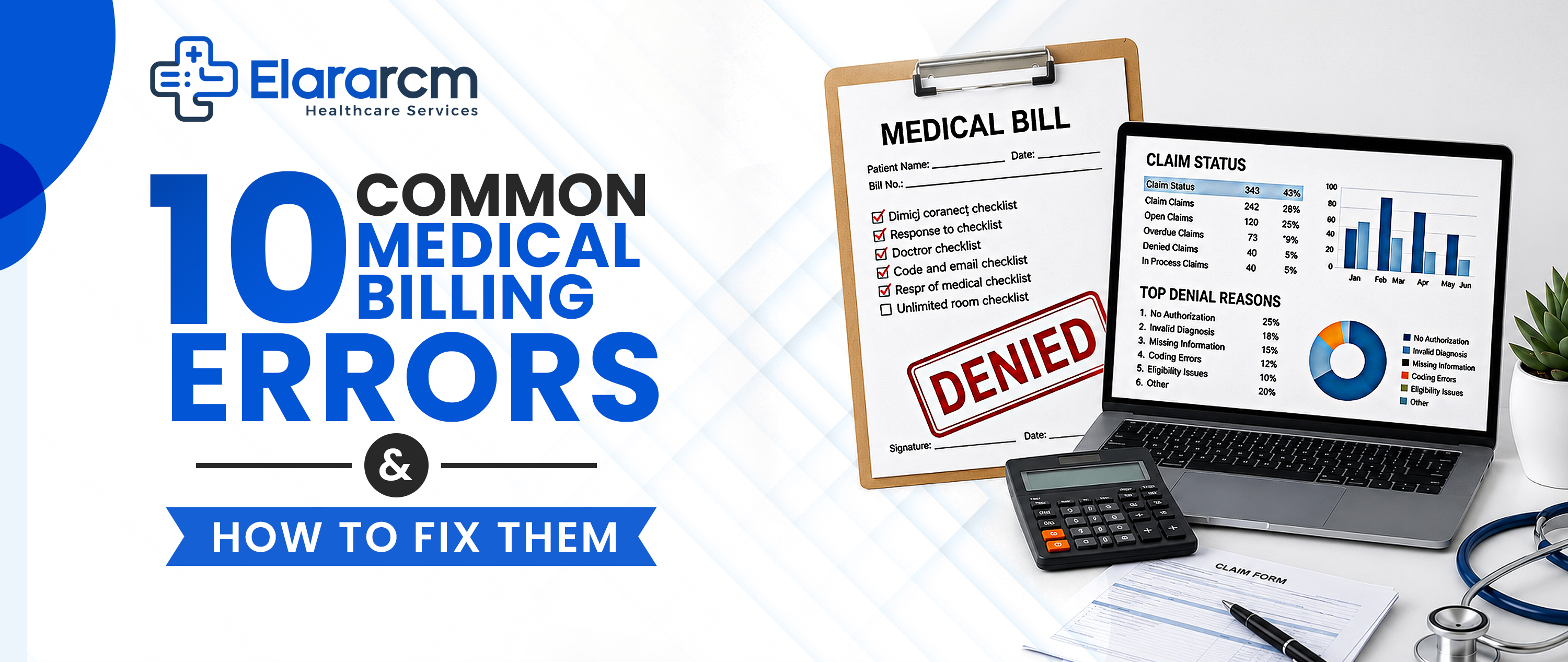
If you are working in healthcare, you already know that medical billing is one of those things that looks easy until you actually experience the process. Then slowly you realize there are just many important details to keep track of.
It’s not one big mistake that often causes denial or rejection most of the time. It’s a small thing: a missed detail here, a wrong entry there, something done in a hurry. At that moment, it doesn’t feel serious, but once the claim goes out and comes back denied, that’s when it starts getting frustrating.
Then begins the cycle: checking what went wrong, fixing it, sending it, and waiting again. When this keeps happening, the whole workflow starts feeling like a heavy burden.
The truth is most of these errors are common. Almost every practice deal with them at some point. But if you catch them early, they are actually not that hard to fix.
Why Do Small Billing Mistakes Turn into Bigger Setbacks Later?
It’s because billing doesn’t work in isolation: one small error doesn’t just stay alone; it moves forward in the system. For example, one claim goes out with missing information and gets rejected. Now someone has to go back, check the file, correct it, and resubmit it. Meanwhile, new claims are coming in. Slowly, instead of moving forward, you are spending time fixing what’s already done. That’s where things start getting stressed.
Are Patient Details Really That Easy to Get Wrong?
When you are handling multiple patients, forms, and entries every day, small mistakes often happen. For instance, a number gets typed wrong; a name is slightly off, or the insurance ID doesn’t match exactly.
This feels minor, but systems don’t ignore these things; they flag them immediately. So, what is the easiest way to deal with this? Be more careful when entering details and do a quick double-check to save a lot of unnecessary work later.
How Does Coding Affect Payments?
Errors in medical coding are not always obvious. Sometimes everything looks fine, but the code doesn’t match the service exactly, or maybe a modifier is missing. When that happens, payments either get delayed or reduced.
The tricky part is that coding keeps changing new updates, and rules can be easy to miss. That’s why regular checking and staying updated are important. Not perfect, but at least enough to avoid repeated mistakes.
What Happens When Claims Are Not Submitted on Time?
Every insurance payer has a time frame, and once that window is gone, the claim might not even be accepted. Usually, delays happen because something earlier in the process gets stuck, which then leads to another. Having a simple routine for submissions helps your practice ensure a streamlined billing process.
Can Missing Documents Stop the Whole Billing Process?
Yes, and it’s one of the most common reasons for delays. If something is missing, the claim will not move forward. It either gets denied or put on hold. So, your billing team has to go back, find that document, attach it, and resend everything.
Why Is Insurance Verification So Important Before Billing?
If a patient’s insurance is not active or the service isn’t covered, the claim won’t go through. Taking a little time to verify coverage beforehand makes the process much smoother later.
Do Duplicate Claims Create Real Problems?
Sometimes when there’s no clear tracking, the same claim gets sent again. Maybe someone thought it wasn’t submitted, or there was confusion in the system. But duplicate claims create delays and confuse the process. Therefore, keeping a simple record of what’s already submitted helps avoid this.
What Happens If Denials Are Not Followed Up?
Denied claims don’t fix themselves, and if no one checks them, they sit there. Over time, that adds up. Going back, understanding why the claim was denied, and fixing it quickly makes a big difference. It’s not always the most exciting part of the job, but it’s important.
Can Poor Communication Really Cause Billing Errors?
If the front desk, doctors, and billing team are not aligned, small gaps appear, and that leads to wrong claims. Even simple communication, such as confirming details, can prevent a lot of errors.
Is Manual Work Making Billing More Difficult?
When everything depends on manual entry, mistakes are bound to happen. Not because people are careless, but because the workload is repetitive. Using better systems doesn’t remove effort, but it reduces the chances of repeating the same mistakes.
Final Thoughts
If you really think about it, billing errors are not unusual. They are part of the process, but when they keep repeating, that’s when they start affecting everything. The goal is not to make everything perfect but to reduce the common mistakes, the ones that keep coming back.
Elara Healthcare Services is a billing company that helps practices manage these small but important details, so billing doesn’t feel like a constant struggle. Because at the end of the day, when billing runs smoothly, your revenue grows and your practice has a better cash flow.